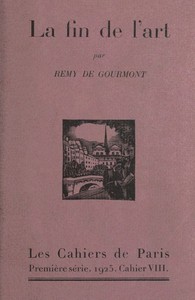
La fin de l'art by Remy de Gourmont
Remy de Gourmont's La fin de l'art isn't a novel with a plot in the traditional sense. Think of it more as a guided tour through the mind of a sharp observer at a pivotal moment. Written in the early 1900s, Gourmont acts as a critic and philosopher, walking us through his central idea: that art, as it was understood for centuries, has reached its conclusion. He looks at the movements of his day—Symbolism, the early rumblings of Modernism—and sees not progress, but an endpoint. The old rules, the old subjects, the old forms feel exhausted to him. The book is his case for why the grand tradition is over, and what that strange, empty feeling in the art world might mean.
Why You Should Read It
First off, Gourmont is a fantastic writer. Even in translation, his voice comes through—clear, confident, and a little combative. Reading him feels like having a debate with a very smart, slightly cynical friend in a Parisian cafe. The themes are what really stick with you. This book makes you question everything you assume about creativity and progress. Is art a straight line forward, or does it have cycles of death and rebirth? When Gourmont declares 'the end,' is he mourning or celebrating? It's fascinating to read this with over a century of hindsight. We can look at the explosive art that came after he wrote—Cubism, Surrealism, Abstract Expressionism—and ask: Was he wrong, or was he right in a way he couldn't have imagined? He predicted an end, but maybe he was really sensing a violent and necessary new beginning.
Final Verdict
This book is perfect for curious readers who enjoy big ideas but hate stuffy writing. It's for anyone who loves art history, cultural criticism, or just great essays that make you think. If you've ever read a critic like Robert Hughes or Lucy Lippard and enjoyed their punchy insights, you'll find a kindred spirit in Gourmont. It's also a surprisingly quick read. Don't go in expecting a simple story; go in ready for a mental workout. You might not agree with his conclusions (I'm not sure I do), but you'll definitely come away seeing both the art of his time and our own with fresh, questioning eyes. A brilliant, challenging little book that proves some conversations are never really over.
This work has been identified as being free of known copyright restrictions. Share knowledge freely with the world.
Ashley White
1 year agoFrom the very first page, the clarity of the writing makes this accessible. Thanks for sharing this review.