
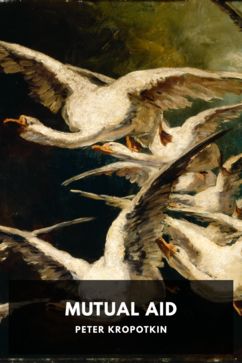
Mutual Aid - Peter Kropotkin
Forget the dusty, academic tome you might be picturing. 'Mutual Aid' is more like a passionate field report from a brilliant observer. Kropotkin wrote it as a direct challenge to the popular social Darwinist ideas of his time, which were being used to justify brutal capitalism and colonialism.
The Story
There isn't a plot in the traditional sense. Instead, Kropotkin builds his case like a detective piecing together clues. He starts in the animal world, showing how species like ants, birds, and mammals don't just compete—they form cooperative groups to hunt, raise young, and survive harsh conditions. He then moves through human history, from prehistoric tribes to medieval guilds and free cities. In each era, he highlights how people created systems of support, shared resources, and organized themselves without top-down rulers. The 'conflict' is his argument against the dominant narrative of perpetual competition. The 'mystery' is why this cooperative side of our story is so often ignored.
Why You Should Read It
This book changed how I see the world. In an age of hyper-individualism, it's a powerful reminder that community isn't a weakness. Kropotkin’s examples are compelling. Reading about medieval villagers working their fields together or sailors forming life-saving rescue associations makes you look at modern mutual aid groups, community fridges, and disaster response in a new light. It’s not naive idealism; he grounds everything in observation. The most thrilling part is realizing this isn't just history or biology—it's a tool for reimagining how we could live. It makes you question the systems we take for granted and spot the threads of cooperation already woven into daily life.
Final Verdict
Perfect for anyone feeling cynical about human nature, curious about anarchist thought beyond the stereotypes, or interested in biology and sociology. It’s also great for activists and community organizers looking for historical inspiration. The writing is clear and energetic, though some 19th-century examples require a bit of focus. Don't expect a political manifesto with all the answers; think of it as a foundational text that offers a radically different, and deeply hopeful, lens for understanding our past and imagining our future. It’s a book that doesn't just sit on your shelf—it gets into your head and changes the conversation.
The copyright for this book has expired, making it public property. It is now common property for all to enjoy.
Karen Wilson
1 year agoFrom the very first page, the clarity of the writing makes this accessible. Truly inspiring.
Emily Young
1 year agoFive stars!
Sandra Miller
10 months agoPerfect.
Kenneth Flores
1 month agoPerfect.
Oliver Garcia
8 months agoFrom the very first page, the narrative structure is incredibly compelling. Exactly what I needed.