
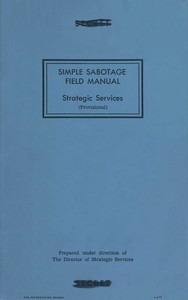
Simple Sabotage Field Manual by United States. Office of Strategic Services
Forget spy gadgets and car chases. The most fascinating weapon from World War II might be this little manual, declassified and now available for anyone to read. Published in 1944 by the CIA's wartime predecessor, the Office of Strategic Services (OSS), this wasn't for commandos. It was written for ordinary people in occupied countries who wanted to resist but couldn't fight openly.
The Story
There's no traditional plot. Instead, the manual is a straightforward list of tactics. It instructs readers on how to sabotage the enemy's machine from within. The first part covers physical acts—like putting sand in a truck's oil tank or starting small, hard-to-trace fires. But the second section is where it gets brilliantly weird. It's called 'General Interference with Organizations and Production.' This part teaches psychological sabotage. It tells you how to be a terrible employee: insist on doing everything 'by the book' to cause delays, refer all decisions to committees, argue over precise wording, bring up irrelevant issues, and re-open settled discussions. The goal was to make organizations so inefficient they'd collapse under their own weight.
Why You Should Read It
This book is a chilling mirror. Reading it, you'll have two reactions. First, you'll laugh because the 'sabotage' techniques are identical to the most frustrating parts of any modern office job. Then, you'll get a little cold feeling because you realize how fragile our systems are. The manual proves that you don't need explosives to destroy something; confusion, bad communication, and stubbornness work just as well. It's a masterclass in how groups fail. Beyond the history, it makes you a sharper observer of why things go wrong at work or in any organization.
Final Verdict
Perfect for history buffs who enjoy 'behind-the-scenes' stories, for anyone fascinated by psychology and group dynamics, and for office workers who will never attend a meeting the same way again. It's a short, direct, and surprisingly funny read that packs a real punch. You'll finish it in an hour, but you'll think about it for much longer.
The copyright for this book has expired, making it public property. Enjoy reading and sharing without restrictions.
James King
3 weeks agoBased on the summary, I decided to read it and the depth of research presented here is truly commendable. Exceeded all my expectations.
Deborah Garcia
3 months agoTo be perfectly clear, the storytelling feels authentic and emotionally grounded. I learned so much from this.
Joshua Clark
2 months agoAmazing book.
Joshua Jones
5 months agoEnjoyed every page.







Margaret Taylor
1 year agoLoved it.