
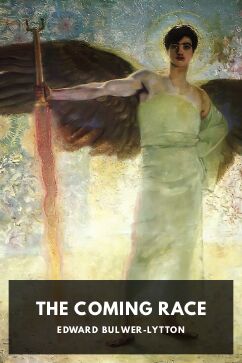
The Coming Race - Edward Bulwer-Lytton
Okay, let's set the scene. It's 1871, and our unnamed narrator is a wealthy Englishman exploring a mine. A tunnel collapse sends him tumbling deep into the Earth, where he discovers a breathtaking, sunlit world inside a gigantic cavern. This is the home of the Vril-ya, a humanoid race far more advanced than us. They're graceful, intelligent, and peaceful, but their society is built on a terrifying foundation: Vril.
The Story
The narrator is taken in by a kindly Vril-ya family and spends his time trying to understand their world. He learns that Vril is a fluid energy they can channel through rods, allowing them to heal, destroy, build, and control matter with their minds. Their society has no crime, poverty, or war—not out of virtue, but because dissent is impossible. Anyone who steps out of line is simply annihilated with Vril. As the narrator grows more familiar with their ways, he realizes a chilling truth: the Vril-ya view surface humans as a lower species, like ants. His presence is tolerated as a curiosity, but his life hangs by a thread. The central tension isn't a chase; it's the psychological horror of being a guest in a gilded cage, knowing your hosts could erase you without a second thought. The story is really about his desperate attempt to escape before they decide he's no longer amusing.
Why You Should Read It
What grabbed me wasn't the plot, but the ideas. Bulwer-Lytton was imagining super-powered beings and a controlled utopia decades before these concepts became sci-fi staples. The Vril-ya are fascinating because they're not evil—they're just so far beyond us that human morality doesn't apply. Reading it, you get this eerie feeling of inferiority. The book asks tough questions: Is absolute peace worth absolute control? Can a society be perfect if it lacks freedom? It's a slow, thoughtful read that builds a deeply unsettling atmosphere. You're not scared of monsters; you're scared of a civilization's polite indifference.
Final Verdict
This book is perfect for readers who love the 'idea-driven' side of classic science fiction and fantasy. If you enjoy H.G. Wells, Jules Verne, or early utopian/dystopian novels, you'll find the origins of many tropes here. Be warned: it's from 1871, so the prose is dense in places and the pacing is deliberate. It's not a page-turning adventure. Think of it as a fascinating, slightly creepy museum piece—a glimpse into what scared and excited the Victorians about the future. For history of sci-fi buffs and fans of philosophical speculation, it's an absolute must-read. For someone wanting a fast-paced story, maybe look elsewhere.
This text is dedicated to the public domain. It serves as a testament to our shared literary heritage.
Emma White
1 year agoBeautifully written.
Ethan Taylor
1 year agoThis book was worth my time since the plot twists are genuinely surprising. Highly recommended.
Donna Gonzalez
10 months agoEnjoyed every page.
Aiden Martinez
1 year agoTo be perfectly clear, the flow of the text seems very fluid. One of the best books I've read this year.

Lisa Johnson
2 months agoWithout a doubt, the emotional weight of the story is balanced perfectly. Exactly what I needed.