
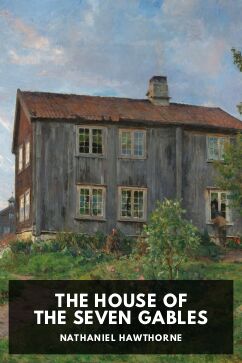
The House of the Seven Gables - Nathaniel Hawthorne
Nathaniel Hawthorne’s The House of the Seven Gables is a classic Gothic tale set in 19th-century Salem, Massachusetts. It centers on the decaying Pyncheon family and their equally decaying ancestral home, which was built on land unjustly taken from a man named Matthew Maule. Old Colonel Pyncheon accused Maule of witchcraft to get the land, and as Maule was hanged, he laid a curse on the Pyncheons.
The Story
The story picks up generations later. Hepzibah Pyncheon, an elderly, impoverished spinster, is forced to open a tiny shop in the ground floor of the mansion to avoid starvation. Her life is one of shadows and pride. Her brother Clifford, who has spent thirty years in prison for a crime he may not have committed, returns home a shattered man, sensitive to beauty but crushed by his past. Into this gloomy household arrives their young country cousin, Phoebe, whose cheerful and practical nature is like a breath of fresh air. She brings a sense of normalcy and care. A lodger named Holgrave, a daguerreotypist (an early photographer) and a boarder with radical ideas, also becomes part of the scene. The main tension comes from the present-day head of the family, the wealthy and stern Judge Jaffrey Pyncheon, who bears an uncanny resemblance to the wicked Colonel. He pressures Clifford about a rumored lost family fortune, and his visits cast a deep chill over the house. The plot unfolds slowly, focusing on the psychological weight of the past on these characters, until a dramatic confrontation forces the old curse to its conclusion.
Why You Should Read It
This isn’t a fast-paced thriller. It’s a mood piece. Hawthorne is a master at building atmosphere. You can almost smell the dust and feel the chill in the halls of that house. The real struggle isn’t with ghosts, but with inherited guilt, pride, and the way the past poisons the present. I found myself feeling deeply for Hepzibah and Clifford—they’re trapped, both by their name and by the physical house itself. Phoebe and Holgrave represent a new, hopeful America, one that might break free from old sins. The book asks big questions: Can you outrun your family’s legacy? Is redemption possible? The prose is rich and requires a bit of patience, but the payoff is a profound sense of a haunting that’s more psychological than supernatural.
Final Verdict
This book is perfect for readers who love atmospheric, character-driven stories with a Gothic feel. If you enjoyed the slow-burn dread of The Turn of the Screw or the thematic weight of family sin in East of Eden, you’ll find a lot to love here. It’s also a great pick for anyone interested in American history and literature, as it’s a direct commentary on the dark legacy of the Puritan era and the Salem witch trials. Just be ready to settle into its deliberate pace and let the haunting atmosphere wash over you.
This publication is available for unrestricted use. Enjoy reading and sharing without restrictions.
Matthew Torres
8 months agoHonestly, the content flows smoothly from one chapter to the next. Truly inspiring.
Charles Martinez
1 year agoText is crisp, making it easy to focus.
Elizabeth Smith
1 year agoAfter finishing this book, the character development leaves a lasting impact. Worth every second.
Matthew Hernandez
1 month agoI started reading out of curiosity and the pacing is just right, keeping you engaged. Don't hesitate to start reading.




Deborah Lewis
1 year agoTo be perfectly clear, the arguments are well-supported by credible references. Exceeded all my expectations.