
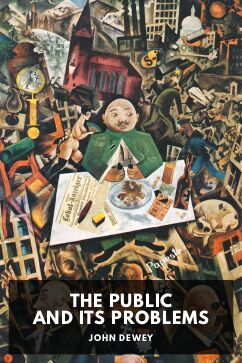
The Public and Its Problems - John Dewey
Let's be honest, a book with a title like 'The Public and Its Problems' sounds like homework. But John Dewey, one of America's great philosophers, wasn't writing for other professors. He was writing for everyone. The book doesn't have a plot in the traditional sense. Instead, think of it as Dewey trying to solve a massive puzzle: Why does modern democracy feel so broken, and what can we actually do about it?
The Story
Dewey starts with a basic idea. A 'public' forms when people realize that their actions affect others, and they need to manage those consequences together. The problem? In the 1920s (and oh boy, today), our 'public' is huge, spread out, and drowned in information. Newspapers, new technologies, and big industries have created a 'Great Society,' but not a 'Great Community.' We're connected, but we aren't talking to each other in any meaningful way. The book is his journey to figure out how to turn that impersonal society back into a living, breathing community where democracy can thrive.
Why You Should Read It
This book is a gut-check. It made me realize how often I complain about politics without thinking about what the foundation of politics even is. Dewey's core belief is electrifying: democracy is a way of life, not just a government system. It happens in school boards, neighborhood meetings, and local clubs. When he talks about the need for 'free and full communication,' it hits differently in the age of Twitter storms and algorithmically sorted news feeds. He wasn't naive; he knew it would be hard work. But his insistence that the answer is more conversation, more local action, and better education—not less democracy—is a powerful antidote to cynicism.
Final Verdict
This is for the curious reader who's tired of hot takes and wants to understand the roots of our civic headaches. It's perfect for community organizers, teachers, journalists, or anyone who feels stuck between political outrage and helplessness. It's not a beach read, but it's a deeply rewarding one. You'll find yourself underlining passages and seeing our current chaos in a new, clearer light. Dewey gives you the philosophical tools to believe that a better public conversation isn't just a nice dream, but a necessary project we can all work on.
This work has been identified as being free of known copyright restrictions. Distribute this work to help spread literacy.
Paul Clark
7 months agoSurprisingly enough, the arguments are well-supported by credible references. Highly recommended.
George Perez
6 months agoBeautifully written.
Betty Smith
5 months agoGood quality content.
Michael Johnson
1 year agoIf you enjoy this genre, the clarity of the writing makes this accessible. This story will stay with me.









Lisa Young
6 months agoAfter finishing this book, the arguments are well-supported by credible references. Truly inspiring.