About 63 minutes
Lays of Ancient Babyland to which are added Small Divers Histories not known to the Ancients — A Closer Reading
Fairy Tales
14,424 recorded words. 2 minutes difference from this book's estimate.
View Gutenberg source #52103
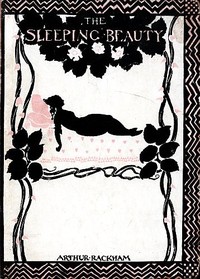
Before opening The Sleeping Beauty — A Closer Reading, the edition data offers a quick orientation: 14,728 words, 1 hr 5 min estimated reading time, and 3 detected text sections.
The text analysis averages about 23.5 words per sentence, while the detected sections provide another way to judge how the source is divided.
Project Gutenberg metadata also associates the work with “Fairy tales,” connecting these edition facts with the source record’s subject description.
Explore this collection
These alternatives are selected using recorded categories and estimated reading time.
About 63 minutes
Fairy Tales
14,424 recorded words. 2 minutes difference from this book's estimate.
View Gutenberg source #52103About 58 minutes
Fairy Tales
13,153 recorded words. 7 minutes difference from this book's estimate.
View Gutenberg source #701About 54 minutes
Fairy Tales
12,400 recorded words. 11 minutes difference from this book's estimate.
View Gutenberg source #45021Search stored excerpts and compare books → Choose by your preferences →
Choices use stored catalog measurements. Estimates vary with reading speed. A shared category is a catalog label, not a claim that two books have the same argument or literary quality.
Search reads excerpt text stored with this catalog and links to its associated Gutenberg record. The connection is stored in the site database; this tool does not recheck that every excerpt is word-for-word identical to that external record. Excerpt search does not cover every chapter and does not verify historical publication dates.
Catalog snapshot checked: 2026-09-25. Coverage: 91 public books, 91 available source excerpts.
Read the complete public-domain text at its original source.
Read on Project GutenbergEvans's version of the Sleeping Beauty opens not with the princess but with the childless King and Queen, whose unhappiness is described in terms of forced public composure: 'they had to smile with their lips for the sake of politeness, but there was no joy in their hearts.' The narrative dwells on the Queen's encounter with a frog—a messenger who grants her wish—and the subsequent birth of Briar-Rose. The text is notable for its detailed, almost cinematic depiction of the sleeping spell spreading through the castle, freezing every activity mid-action: a cook boxing a kitchen-knave's ear, a page-boy falling asleep mid-note, and even the fire ceasing to flicker.
The most striking passages in the excerpts are those that catalogue the enchanted slumber. Evans lists the sleeping inhabitants with a methodical precision that builds a sense of total paralysis: 'Courtiers, officers, stewards, cooks, errand-boys, soldiers, beadles,—nay the very horses in the stables and the dogs in their kennels were stricken motionless.' The description extends beyond humans to animals and even inanimate objects—the spits cease turning, the flames sink down. This accumulation of detail creates a world where time has stopped, and the reader is made to feel the weight of the hundred-year pause.
Evans gives the thorn hedge a vivid, almost organic presence: it grows 'tangled with ivy, woodbine and creeping plants, so dense that from a distance it seemed like a little wood.' The hedge is not merely a barrier but a marker of the passage of time. Outside, seasons change—spring brings 'bluebells in the woods and daffodils dancing in the breeze'—but inside the hedge, 'no life stirred.' The narrative explicitly notes that the story is passed down and altered by each generation, becoming a legend that attracts princes who 'perished miserably,' their bones left as a warning. This framing gives the fairy tale a historical depth, acknowledging the toll of the curse.
Evans's prose is formal yet accessible, with a measured pace that suits the fairy-tale tone. He uses repetition for effect, as in the opening paragraph's emphasis on the royal couple's childlessness: 'Every day the King would look at the Queen and say: "Ah, if we only had a little child."' The dialogue is polite and slightly archaic—the Queen addresses the frog as 'Master Frog'—and the narrative often steps back to comment on the characters' feelings, such as the King and Queen's need to hide their emotions. The structure follows the familiar arc of the tale but lingers on moments of stillness and transition, such as the gradual spread of sleep and the slow growth of the hedge.
Readers may find it useful to attend to the way Evans balances the known story with his own descriptive expansions. The excerpts suggest a version that values atmosphere over action, particularly in the long passages detailing the enchanted sleep. The illustrations by Arthur Rackham, though not included in the text, are referenced in the front matter and likely complement the visual quality of the writing. This edition offers a chance to observe how a familiar tale can be reshaped through careful attention to sensory detail and emotional restraint.
That rainy afternoon, I kept returning to the stillness Rackham painted—the castle frozen mid-breath, waiting. It made me wonder about other stories where time itself feels like a held sigh. Later, half-dozing, I found myself leafing through Tales from the Arabic — Volume 02 — Themes and Context, and that same patient hush seemed to live there too, between the lines of older, quieter narratives.
Your answers remain private and are stored only in this browser.









