About 293 minutes
Atlantida — Inside the Classic
Folklore
67,360 recorded words. 11 minutes difference from this book's estimate.
View Gutenberg source #14301
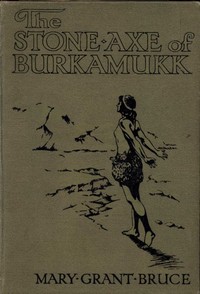
Before opening The Stone Axe of Burkamukk — Key Ideas to Explore, the edition data offers a quick orientation: 69,706 words, 5 hr 4 min estimated reading time, and 6 detected text sections.
The text analysis averages about 18.3 words per sentence, while the detected sections provide another way to judge how the source is divided.
Project Gutenberg metadata also associates the work with “Folklore -- Australia,” connecting these edition facts with the source record’s subject description.
Explore this collection
These alternatives are selected using recorded categories and estimated reading time.
About 293 minutes
Folklore
67,360 recorded words. 11 minutes difference from this book's estimate.
View Gutenberg source #14301About 276 minutes
Folklore
63,401 recorded words. 28 minutes difference from this book's estimate.
View Gutenberg source #69724About 274 minutes
Folklore
62,991 recorded words. 30 minutes difference from this book's estimate.
View Gutenberg source #557Search stored excerpts and compare books → Choose by your preferences →
Choices use stored catalog measurements. Estimates vary with reading speed. A shared category is a catalog label, not a claim that two books have the same argument or literary quality.
Search reads excerpt text stored with this catalog and links to its associated Gutenberg record. The connection is stored in the site database; this tool does not recheck that every excerpt is word-for-word identical to that external record. Excerpt search does not cover every chapter and does not verify historical publication dates.
Catalog snapshot checked: 2026-09-25. Coverage: 91 public books, 91 available source excerpts.
Read the complete public-domain text at its original source.
Read on Project GutenbergThe Stone Axe of Burkamukk opens not with a single narrative but with a foreword that frames the entire collection as an act of cultural salvage. Mary Grant Bruce writes that 'the folk-tales of a people are the story of its soul,' and she urges young Australians to collect and preserve the legends of Aboriginal tribes before they vanish. This editorial stance shapes the book's structure: each tale is presented as a discrete unit, yet the foreword binds them into a purposeful anthology.
The title story itself demonstrates Bruce's method. It begins with a peaceful camp scene—'the wurleys were built in a green glade'—and quickly introduces a pattern of movement between safety and danger. The creek and swamp are not just setting but active elements: the swamp is 'as good as a storehouse of food,' and later the river becomes a site of escape and concealment. This oscillation between calm and threat recurs throughout the excerpts.
In the title story, water functions as both a means of survival and a barrier. When Yurong is thrown into the river, he deliberately sinks, letting the current carry him. The narrative emphasizes his physical ordeal: 'the eddy dragged him down,' and he scrapes through a hole in the rock 'far under the water.' Yet water also hides him—he finds a 'hiding-place under a great boulder' after scrambling out. This dual role is echoed in other tales: the swamp near the camp provides food, but the river where Yurong nearly drowns is a place of death. The Baringas watch the 'black pool' and declare, 'No man ever came alive out of that place.' Water is never neutral; it is a threshold between life and death, visibility and concealment.
Bruce repeatedly draws attention to watching and being watched. Yurong 'dogged her footsteps' in the forest, and the narrative notes that 'the sight of her, and the beauty of her, burned into Yurong's brain.' The camp itself is under observation: Yurong hides in the forest, 'always watching the camp.' This surveillance is reciprocal—the Baringas watch the river for signs of Yurong's death. The most striking instance is the description of Konawarr, who 'so rarely took his gaze from her' that Miraga scarcely has a chance to look at him. The gaze is a form of possession, and Yurong's jealousy is described through a simile: 'he thirsted to kill him, as the kangaroos thirst for the creeks in summer.' The act of looking is never passive; it is tied to desire, danger, and the threat of violence.
A recurring detail in the excerpts is the presence of animals that interact freely with humans. Miraga is surrounded by children and 'the little animals came to her and played at her feet.' Yurong observes this with amazement, interpreting it as a sign of the tribe's wealth: 'they are able to use food for playthings!' This moment reveals a cultural logic where the domestication or tameness of animals is a measure of abundance. The narrative does not explain how these animals are tamed; it simply presents them as part of the camp's fabric. The contrast with Yurong's own tribe, the Baringas' enemies, is implied: his astonishment suggests that such ease with animals is not universal. The detail is small but structurally significant, as it reinforces the theme of observation—Yurong learns about the tribe by watching its children and animals.
The geography of the stories is defined by movement: from camp to swamp, from forest to river, from hiding place to open ground. The camp is a site of safety and community—'the camp lay calm and peaceful'—but it is also vulnerable. Yurong moves from the forest edge to the river, then back to hiding near the camp. The girls go 'out into the scrub, yam-digging,' carrying their yam-sticks and dilly-bags. These journeys are routine but fraught: the forest is where Yurong lurks, and the river is where death nearly occurs. Bruce uses directional language—'out,' 'back,' 'under,' 'through'—to create a sense of constant transit. The stories rarely linger in one place; they are built on the tension between the known safety of the camp and the unknown dangers of the bush. This movement is not just physical but narrative: each tale shifts between scenes of domestic life and moments of peril.
Readers approaching The Stone Axe of Burkamukk should attend to the way Bruce balances ethnographic intent with narrative craft. The foreword asks us to see these tales as records of a vanishing culture, but the stories themselves are shaped by patterns of escape, watching, and movement that give them a literary coherence beyond their documentary value. The excerpts suggest that water, animals, and the gaze are not incidental details but structural elements that recur across the collection. Treat each tale as both a standalone legend and a piece of a larger mosaic.
I keep thinking about Yurong’s water-haunted flight, how the old stories feel like places you can still almost visit. Bruce’s plea to preserve them stays with me, especially now. That same ache surfaces in The Testimony of Tradition — Key Ideas to Explore, where memory itself becomes the quiet current. Strange how a century later, we’re still learning to listen before the water closes over.
Create a short personal record of your experience with this book.









