About 195 minutes
Bypaths in Dixie: Folk Tales of the South — Edition Insights
Folklore
44,638 recorded words. 3 minutes difference from this book's estimate.
View Gutenberg source #41598
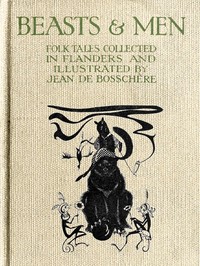
For Beasts & Men Folk Tales Collected in Flanders and Illustrated by Jean de Bosschère — Key Ideas to Explore, the stored edition analysis reports 45,323 words, 3 hr 18 min estimated reading time, and 7 detected text sections.
The text analysis averages about 17.3 words per sentence, while the detected sections provide another way to judge how the source is divided.
Project Gutenberg metadata also associates the work with “Animals -- Folklore,” connecting these edition facts with the source record’s subject description.
Explore this collection
These alternatives are selected using recorded categories and estimated reading time.
About 195 minutes
Folklore
44,638 recorded words. 3 minutes difference from this book's estimate.
View Gutenberg source #41598About 192 minutes
Folklore
44,102 recorded words. 6 minutes difference from this book's estimate.
View Gutenberg source #28990About 204 minutes
Folklore
46,885 recorded words. 6 minutes difference from this book's estimate.
View Gutenberg source #46047Search stored excerpts and compare books → Choose by your preferences →
Choices use stored catalog measurements. Estimates vary with reading speed. A shared category is a catalog label, not a claim that two books have the same argument or literary quality.
Search reads excerpt text stored with this catalog and links to its associated Gutenberg record. The connection is stored in the site database; this tool does not recheck that every excerpt is word-for-word identical to that external record. Excerpt search does not cover every chapter and does not verify historical publication dates.
Catalog snapshot checked: 2026-09-25. Coverage: 91 public books, 91 available source excerpts.
Read the complete public-domain text at its original source.
Read on Project GutenbergThe tales in Beasts & Men repeatedly hinge on a moment of mistaken identity or a clever ruse. In “The Cock and the Fox,” the fox’s flattery nearly succeeds, while in “Why Cats Always Wash After Eating,” a cat’s grooming habit is explained through a sly deception. The stories often begin with a simple domestic scene—a peasant at work, children playing—before a talking animal or supernatural event upends the ordinary.
Jean de Bosschère’s illustrations, mentioned in contemporary reviews as “droll fancy” and “grotesque,” complement the text’s blend of earthy humor and sudden peril. The collection’s structure moves fluidly between beast fables and human-centered anecdotes, with several tales featuring the same recurring characters, such as the trickster Reynard the Fox and the gullible wolf Garon.
Across the excerpts, characters frequently change form or conceal their identity. In “The Magic Cap,” a cap grants wishes, while in “The Witch’s Cat,” a cat may be more than it seems. The most striking example is in “Sugar-Candy House,” where the wolf Garon is initially fooled by the children’s repeated claim that “It’s the wind so mild, / That lovable child!”—a verbal disguise that temporarily masks their true actions. This motif of disguise extends to animals impersonating humans, as in “The Peasant and the Satyrs,” where satyrs mimic human behavior. The tales often use physical transformation as a plot device: a rib torn from a side, an ear cut off, or a stumpy tail explained by a failed trick. These transformations are rarely permanent, suggesting a world where identity is fluid and deception is a survival skill.
The stories frequently begin in a familiar, bounded setting—a cottage, a farmyard, a village—and then propel characters into the wild. In “Jan and Jannette,” the children leave their home near a big wood and cross a red bridge into a forest where a wolf lives in a candy house. Similarly, “The Peasant and His Ass” starts on a farm but quickly moves to a road where the peasant encounters talking animals. This spatial shift often marks a transition from safety to danger, or from reality to the fantastic. The wild spaces are not merely backdrops but active agents: rivers, woods, and fields test the characters’ wits. The ducks in “Sugar-Candy House” serve as a bridge between the human world and the animal realm, carrying the children across a river—a literal and symbolic crossing. The movement is often circular, with characters returning home changed, as in “The Magic Cap,” where the protagonist’s journey ends back at his cottage.
Many tales in this collection employ a repetitive structure that builds tension through incremental variation. In “Sugar-Candy House,” the wolf’s question “Who is touching my Sugar-Candy House?” is repeated three times, with the children’s answer unchanged until the third repetition, when the wolf’s suspicion grows. This pattern of three—common in folklore—appears also in “The Three Monkeys” and “The Trial of Reynard the Fox,” where Reynard’s defenses are presented in escalating stages. The repetition is not mechanical; each iteration adds a detail that shifts the outcome. In “The Cock and the Fox,” the cock’s repeated refusals to come down from the tree are met with increasingly elaborate flattery. This structure allows readers to anticipate the rhythm while being surprised by the twist. The tales often end with a moral or a sudden reversal, such as the wolf being tricked by the ducks after he threatens them.
The characters in Beasts & Men are defined largely by their speech. The wolf Garon speaks in growls and threats (“Gr-r-r, I’ll eat them up!”), while the children use a singsong rhyme to deceive him. Reynard the Fox is eloquent and manipulative, using flattery and legal jargon in his trial. The animals often speak in a formal, almost courtly manner, contrasting with the bluntness of human peasants. In “The Peasant and the Satyrs,” the satyrs’ dialogue is marked by mockery and mimicry. This vocal differentiation helps readers distinguish characters quickly, even in tales with minimal description. The dialogue also drives the plot: a clever reply can save a life, while a foolish boast leads to downfall. The stories rarely use interior monologue; instead, characters reveal their intentions through what they say aloud, making the tales well-suited for oral performance.
Readers approaching Beasts & Men will find a collection that rewards attention to pattern and repetition. The tales are best read in sequence, as motifs recur and characters reappear across stories. The illustrations, though not reproduced in this digital edition, are integral to the original work’s effect; readers may wish to seek out the printed version to experience Bosschère’s visual interpretations. The language is direct and rhythmic, echoing the oral tradition from which these tales were collected.
The rain kept time with the fox’s tricks in Beasts & Men, and I let my mind drift into those muddy Flemish lanes. An odd quiet settled in, a longing for other voices telling similar truths. That afternoon, I found myself turning pages of Folk-Lore and Legends: Oriental — Reading Companion. Not a leap, really. Just the same old weather, wearing different clothes.
Capture what you thought, learned, and would like to remember.









