About 19 minutes
The Matsuyama Mirror — Reading Notes
Fairy Tales
4,294 recorded words. 2 minutes difference from this book's estimate.
View Gutenberg source #30020
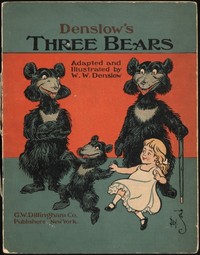
The source record for Denslow's Three Bears — Themes and Context measures this digital text at 3,842 words, 17 min estimated reading time, and 1 detected text section.
The text analysis averages about 24.8 words per sentence, while the detected sections provide another way to judge how the source is divided.
Project Gutenberg metadata also associates the work with “Fairy tales,” connecting these edition facts with the source record’s subject description.
Explore this collection
These alternatives are selected using recorded categories and estimated reading time.
About 19 minutes
Fairy Tales
4,294 recorded words. 2 minutes difference from this book's estimate.
View Gutenberg source #30020About 19 minutes
Fairy Tales
4,296 recorded words. 2 minutes difference from this book's estimate.
View Gutenberg source #30024About 28 minutes
Fairy Tales
6,404 recorded words. 11 minutes difference from this book's estimate.
View Gutenberg source #30580Search stored excerpts and compare books → Choose by your preferences →
Choices use stored catalog measurements. Estimates vary with reading speed. A shared category is a catalog label, not a claim that two books have the same argument or literary quality.
Search reads excerpt text stored with this catalog and links to its associated Gutenberg record. The connection is stored in the site database; this tool does not recheck that every excerpt is word-for-word identical to that external record. Excerpt search does not cover every chapter and does not verify historical publication dates.
Catalog snapshot checked: 2026-09-25. Coverage: 91 public books, 91 available source excerpts.
Read the complete public-domain text at its original source.
Read on Project GutenbergW.W. Denslow's 1903 version of the three bears story opens not with an intrusion but with a domestic scene: Golden Hair, an orphan living with her grandmother, discovers the bears' cabin while gathering autumn leaves. The sign on the door—"Papa Bear, Mamma Bear, and the Tiny Bear"—announces the family in a matter-of-fact tone that sets the story apart from earlier tellings. Rather than eating the bears' food or breaking furniture, Golden Hair cleans the disorderly house before the bears return. When they arrive, they laugh and welcome her, and the tale quickly becomes a story of cooperative living: the bears move in with Golden Hair and her grandmother, dividing chores by size and ability.
The familiar plot point of an uninvited child entering a bear home is recast here as a neighborly visit. Golden Hair knocks, reads the sign, and decides to tidy up. The bears, upon finding her, "burst into loud laughter" and invite her to share dinner. This inversion—where the intruder becomes a helper and the bears respond with amusement rather than anger—shifts the moral weight from punishment to generosity. The text emphasizes the bears' good-natured reaction: they "thanked her heartily" for cleaning. The grandmother, initially surprised, is "delighted to have them stay" after seeing how helpful they are. Denslow replaces the traditional climax of fear or flight with a settlement agreement: the bears will live with the humans for "the general good."
Once the bears move in, the story details a precise allocation of chores based on size and strength. Papa Bear splits wood, builds fires, and stands guard at night. Mamma Bear handles housework "under the direction of Golden Hair." The Tiny Bear waits on the grandmother and runs errands. This arrangement mirrors the three bowls and chairs of earlier versions but repurposes the size hierarchy into a functional domestic system. The text notes that the grandmother "liked the three bears so well" and that the bears were "so delighted with the comforts of home" that they chose to stay. Denslow's version thus transforms a cautionary tale into a fable about mutual benefit and orderly cooperation, where each creature contributes according to its capacity.
Although the excerpts do not include the illustrations, the text itself carries a rhythmic, almost verse-like quality. Phrases such as "a big bowl for Papa Bear, a medium sized bowl for Mamma Bear, and a little bowl for the Tiny Bear" echo the repetitive structure of the original tale. The description of Golden Hair as "a ray of sunshine in the dusky room" contrasts light with the bears' dim cabin, reinforcing her role as a civilizing force. The narrative voice is brisk and concrete, favoring action over description: the bears "split the wood, brought it in, and built the fire." Denslow, known for his work on The Wonderful Wizard of Oz, brings a visual storyteller's economy to the prose, with each sentence advancing the plot or character dynamic.
Readers familiar with the traditional "Goldilocks" story will find Denslow's version a deliberate reworking of its premises. The absence of broken furniture, eaten porridge, or a frightened escape suggests a different intended audience—one for whom order, hospitality, and communal living are the central virtues. The text's brevity (under 4,000 words) and its emphasis on cooperation make it suitable for early readers, while the division of labor offers a subtle lesson in social roles. Pay attention to how Denslow uses size and domestic tasks to structure the narrative, and consider how the illustrations (not reproduced here) might reinforce or complicate the text's cheerful domesticity.
There’s something so gentle about the idea of Golden Hair putting the bears’ cabin in order—not taking, but tending. It reminds me of the older stories, where hospitality bends the world just slightly. Sometimes I think of the Manx tales in that same quiet light. Manx Fairy Tales — A Reader’s Guide holds that same patient warmth, like a hearth remembered from childhood. Just a feeling, really.
Use these questions to collect your thoughts before moving on.









