About 30 minutes
The Popular Story of Blue Beard — Story, Setting & Ideas
Fairy Tales
6,886 recorded words. 2 minutes difference from this book's estimate.
View Gutenberg source #43457
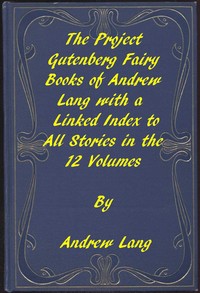
Before opening The Fairy Books of Andrew Lang A Project Gutenberg Linked Index to All Stories in the 12 Volumes — Themes and Context, the edition data offers a quick orientation: 6,404 words, 28 min estimated reading time, and 3 detected text sections.
The text analysis averages about 45.4 words per sentence, while the detected sections provide another way to judge how the source is divided.
Project Gutenberg metadata also associates the work with “Fairy tales,” connecting these edition facts with the source record’s subject description.
Explore this collection
These alternatives are selected using recorded categories and estimated reading time.
About 30 minutes
Fairy Tales
6,886 recorded words. 2 minutes difference from this book's estimate.
View Gutenberg source #43457About 30 minutes
Fairy Tales
6,870 recorded words. 2 minutes difference from this book's estimate.
View Gutenberg source #71096About 19 minutes
Fairy Tales
4,294 recorded words. 9 minutes difference from this book's estimate.
View Gutenberg source #30020Search stored excerpts and compare books → Choose by your preferences →
Choices use stored catalog measurements. Estimates vary with reading speed. A shared category is a catalog label, not a claim that two books have the same argument or literary quality.
Search reads excerpt text stored with this catalog and links to its associated Gutenberg record. The connection is stored in the site database; this tool does not recheck that every excerpt is word-for-word identical to that external record. Excerpt search does not cover every chapter and does not verify historical publication dates.
Catalog snapshot checked: 2026-09-25. Coverage: 91 public books, 91 available source excerpts.
Read the complete public-domain text at its original source.
Read on Project GutenbergAndrew Lang's twelve color-coded fairy books—from Blue to Olive—are here reduced to a single, navigable index. David Widger's compilation lists every story title as it appears in the original volumes, preserving the idiosyncratic punctuation and capitalization of the source texts. The index is organized both by color (Blue, Red, Yellow, Violet, Crimson, Orange, Brown, Lilac, Pink, Grey, Green, Olive) and alphabetically, offering two routes into the collection. This is not a book of tales but a finding aid: a map of a vast story territory.
The twelve color volumes are not thematically distinct; a story like “The Master-Maid” appears in the Blue book, while “The Master Thief” is in Red. The color label is a branding device, not a genre marker. The index lists each volume's contents under its color heading, with titles such as “East Of The Sun And West Of The Moon” and “The Story Of Prince Ahmed And The Fairy Paribanou” retaining their original line breaks and ampersands. This layout mirrors the physical books' tables of contents, where a single tale often spans multiple lines. The alphabetical section then merges all volumes, so “Rapunzel” sits alongside “Rumpelstiltzkin” regardless of source. The index thus reveals the collection's structure: a curated but eclectic assembly, unified by Lang's editorial hand rather than by any single cultural tradition.
The index preserves the exact wording and punctuation of each story's title as printed in the original editions. This yields curiosities: “The Water-Lily. The Gold-Spinners” appears as a single entry, suggesting a combined tale or a printing quirk. Similarly, “The Master Cat; Or, Puss In Boots” retains its semicolon and capitalization. These details matter because they reflect the Victorian-era formatting choices that Lang's editors made. The alphabetical list includes variants like “Snow-White And Rose-Red” alongside “Snowdrop” and “Snowflake,” showing how the same character type recurs under different names. The index does not standardize or modernize; it reproduces the text as given, making it a primary source for studying how fairy tales were titled and grouped in the early twentieth century.
For a reader seeking a specific story, the alphabetical index is the primary entry point. It lists over 400 titles, from “Aladdin And The Wonderful Lamp” to “Zoulvisia.” The color sections then show which volume contains each tale. This dual structure allows two kinds of browsing: by color (e.g., all stories in the Green Fairy Book) or by title. The index also includes a section for “OTHER_LANG_WORKS,” hinting at additional material beyond the fairy books. David Widger's editorial note credits production to “David Widger for Gracie, Callie and Christopher,” personalizing the otherwise mechanical task. The index is a practical tool, but its preservation of original formatting and its inclusion of obscure tales—such as “The Norka” or “The Hazel-Nut Child”—make it a document of literary history.
This index is best used as a companion to the twelve volumes themselves. To locate a story, consult the alphabetical list first; to browse a single volume, turn to the color sections. Note that some titles appear in multiple colors—check each volume for variations. The index does not summarize plots or provide page numbers, but it faithfully records what Lang's editors chose to print.
That gray afternoon, I kept getting lost in Lang’s index, flipping from blue to crimson tales, until a quiet footnote about Japanese storytelling caught me. Hours vanished, as they do. Later, I stumbled upon the gentler cadence of Japanese folk stories and fairy tales — Edition Insights, and the rain outside seemed to soften, just a little.
Answer a few questions and save a private reflection on this device.









