About 19 minutes
The perverse Erse — Context and Discussion
Folklore
4,363 recorded words. 3 minutes difference from this book's estimate.
View Gutenberg source #70146
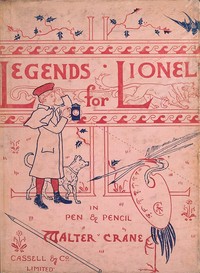
The source record for Legends for Lionel: in pen and pencil — Story, Setting & Ideas measures this digital text at 3,584 words, 16 min estimated reading time, and 2 detected text sections.
The text analysis averages about 26.8 words per sentence, while the detected sections provide another way to judge how the source is divided.
Project Gutenberg metadata also associates the work with “Fantasy fiction,” connecting these edition facts with the source record’s subject description.
Explore this collection
These alternatives are selected using recorded categories and estimated reading time.
About 19 minutes
Folklore
4,363 recorded words. 3 minutes difference from this book's estimate.
View Gutenberg source #70146About 36 minutes
Folklore
8,125 recorded words. 20 minutes difference from this book's estimate.
View Gutenberg source #32686About 63 minutes
Folklore
14,370 recorded words. 47 minutes difference from this book's estimate.
View Gutenberg source #9459Search stored excerpts and compare books → Choose by your preferences →
Choices use stored catalog measurements. Estimates vary with reading speed. A shared category is a catalog label, not a claim that two books have the same argument or literary quality.
Search reads excerpt text stored with this catalog and links to its associated Gutenberg record. The connection is stored in the site database; this tool does not recheck that every excerpt is word-for-word identical to that external record. Excerpt search does not cover every chapter and does not verify historical publication dates.
Catalog snapshot checked: 2026-09-25. Coverage: 91 public books, 91 available source excerpts.
Read the complete public-domain text at its original source.
Read on Project GutenbergWalter Crane's Legends for Lionel began as a private amusement: the preface explains that the sketches were "the offspring of the odd half hours of winter evenings, originally intended strictly for home consumption." The book's dedicatee, a young Lionel with an appetite for both stories and paints, prompted a series of linked fancies that move from Jack Frost's herald to a tinker's magical retirement. Crane's preface wryly notes that "one thing, however, leads to another, just as the sketches did," and the resulting volume—published in 1887 by Cassell & Company—retains the feel of a fireside game spun out across a season.
The narrative proceeds by association rather than plot. Jack Frost sends a herald; the world thinks of skating; then comes Thaw, followed by Fog, in which Lionel begins to look for Christmas. Each element transforms into the next: the fog yields "dim and cloudy outlines, across a white expanse, dotted with sugar-plums," which lead to a house in a garden of Christmas trees. The door is opened by a turkey, supported by attendant sausages, followed by plum pudding, mince pies, crackers, and a rain of bon-bons. Crane's method is accumulative and visual—a catalogue of Victorian Christmas imagery rendered as a dream-logic procession.
Midway the book shifts register. Lionel "takes to another branch of the black business" and becomes a tinker, trundling his workshop with a dog at his heels. On the common he encounters a pot and a kettle "in hot dispute" and mends their difference with a piece of cracked looking-glass. Soon he meets a whole population of pots and pans, fire-irons waiting to be set on their legs, and fire-dogs that leave the chimney corner to follow him. Good Luck flings an old horseshoe after him. The tinker gathers all the village's old iron, then "turns Magician, transmutes it into gold and retires from business." The transformation is literal and comic—a tradesman's fantasy of alchemical profit.
Crane's prose is brisk and singsong, full of internal rhymes and rhythmic lists: "King Frost was in his Freezing House: Nipping toes and noses! / Green Spring was in her sleeping car, Tying up her posies." The verse-like passages sit alongside plain narrative, and the whole is punctuated by the author's own pen-and-pencil illustrations (the subtitle promises both). The preface frames the book as a domestic artifact—"this book of sketches"—and the text retains the spontaneity of something drawn and told at once. Readers should watch for the way objects acquire voices and agency: spades talk to hoses, pots argue, and a pie "stood and flapped its wings."
Crane's Legends for Lionel rewards attention to its small, precise inventions: the sugar-plum dots in the fog, the cracked looking-glass that mends a quarrel, the fire-dogs that abandon their hearth. The book is best read as a sequence of visual and verbal surprises, not as a continuous story. Let the transformations carry you from frost to feast to scrap-metal gold, and note how each episode springs from a domestic object or a winter custom. The pleasure lies in the unexpected connections Crane draws between them.
Leafing through Crane’s plump plum-puddings and tinker’s golden scraps, I felt that same hushed oddness I once knew in Flanders – where beasts talk plainly and magic sits in ordinary pots. Strange, how fairy tales trade in tin and fur. This quiet collection drifts back to me now: Beasts & Men Folk Tales Collected in Flanders and Illustrated by Jean de Bosschère — Key Ideas to Explore, its ink lines like a remembered winter.
A brief reflection can help important ideas stay with you longer.









