About 358 minutes
Visions and Beliefs in the West of Ireland, First Series — Key Ideas to Explore
Myths Legends
82,332 recorded words. 232 minutes difference from this book's estimate.
View Gutenberg source #43973
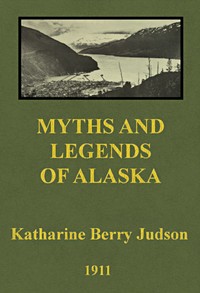
For Myths and Legends of Alaska — Themes and Context, the stored edition analysis reports 28,789 words, 2 hr 6 min estimated reading time, and 67 detected text sections.
The text analysis averages about 12.9 words per sentence, while the detected sections provide another way to judge how the source is divided.
Project Gutenberg metadata also associates the work with “Alaska Native mythology,” connecting these edition facts with the source record’s subject description.
Explore this collection
These alternatives are selected using recorded categories and estimated reading time.
About 358 minutes
Myths Legends
82,332 recorded words. 232 minutes difference from this book's estimate.
View Gutenberg source #43973About 394 minutes
Myths Legends
90,396 recorded words. 268 minutes difference from this book's estimate.
View Gutenberg source #71656About 487 minutes
Myths Legends
111,814 recorded words. 361 minutes difference from this book's estimate.
View Gutenberg source #69558Search stored excerpts and compare books → Choose by your preferences →
Choices use stored catalog measurements. Estimates vary with reading speed. A shared category is a catalog label, not a claim that two books have the same argument or literary quality.
Search reads excerpt text stored with this catalog and links to its associated Gutenberg record. The connection is stored in the site database; this tool does not recheck that every excerpt is word-for-word identical to that external record. Excerpt search does not cover every chapter and does not verify historical publication dates.
Catalog snapshot checked: 2026-09-25. Coverage: 91 public books, 91 available source excerpts.
Read the complete public-domain text at its original source.
Read on Project GutenbergIn the preface to Myths and Legends of Alaska, Katharine Berry Judson describes a world that begins as a great ocean with only a great Bird, whose black wings raise the earth from the waters. This creation story sets a pattern: the land is soft, the first man bursts from a beach pea pod, and Raven appears to shape beings, animals, and plants. The collection draws from multiple Alaskan Native groups—Tlingit, Eskimo, Haida, and others—and the excerpts show a consistent tension between the creative and the dangerous. Evil spirits carry away the sun and moon, hanging them in dome-shaped huts, and darkness blackens skin. The compiler frames these narratives as explanations for natural hardships: bitter winds, ice floes, and the run of salmon are governed by spirits, and shamans must counter them with incantations and ceremonial dances.
Two creation accounts in the excerpts offer contrasting origins. In the preface, a great Bird dips its wings and earth arises; later, a man takes mud from a muskrat’s hands, dries it, crumbles it, and blows dust over the waters to form the world. This second version, attributed to an unspecified source, emphasizes a small, humble substance—mud—transformed by breath. A third account, from the Eskimo of Bering Straits, tells of a man and woman who descend from the sky to the Diomede Islands. The man carves five dolls from walrus ivory and five from wood; overnight they become people. The ivory dolls become men, “therefore they are brave and hardy,” while the wooden dolls become women, “therefore they are soft and timid.” This explicit link between material and character is a rare moment where the text assigns gendered traits based on the origin substance, contrasting with the mud-based creation that lacks such differentiation.
The story “The First Woman” from the Eskimo (Bering Straits) presents a striking origin for gender-based abilities. Initially, only one woman exists, in the south. A northern man marries her, but the son of the headsman also wants her. In a struggle, the two men pull her apart: the son carries the upper body north, the husband keeps the lower body south. Each then carves wood to complete the woman. The southern woman becomes a good dancer but cannot sew fine furs because her hands are wooden; the northern woman sews skillfully but dances poorly because her feet are wooden. The tale concludes that “all the women of the north are skilful with their hands, and all the women of the south are good dancers, even to this day.” This etiological narrative ties regional craft traditions to a violent, literal division of a single body, and the closing line—“Thus you may know that the tale is true”—asserts its explanatory power.
“The First Tears,” another Eskimo tale from Bering Straits, offers a spare account of how humans learned to cry. Man hunts seals but fails repeatedly; each time a seal slips away. Finally, after the last seal escapes, “his breast was full of a strange feeling. Water began to drop from his eyes.” He catches the drops, recognizes them as water, and then “loud cries came from his breast.” His son and daughter-in-law witness this, and water also comes from their eyes. The story ends with Man and his son killing a seal and making snares from its skin. The narrative links emotional expression directly to hunting failure—a practical, survival-oriented context. Unlike the creation tales that explain physical origins, this one accounts for a human behavior (crying) through a specific, relatable event: the frustration of losing prey. The cause is not supernatural but experiential, and the resolution (successful hunting) restores order.
Judson’s collection does not smooth over the diversity of its sources. Readers will encounter multiple, sometimes contradictory, accounts of creation, the origin of people, and the workings of the world. The excerpts show that Alaskan Native myths often ground abstract concepts—like the division of labor or the expression of grief—in concrete, physical details: mud, ivory, wood, seals. Pay attention to the recurring role of Raven, who appears in the preface as a creator and trickster, and to the way each story anchors its explanation in a specific landscape or animal. The book rewards a comparative reading, noting how different groups account for similar phenomena.
That rainy afternoon, I kept returning to the Raven stories in Myths and Legends of Alaska—how the trickster’s hunger shaped the world. Close the book, and the same creature lurked in another language entirely, so I found myself tracing animal spirits across continents in Zoological Mythology; or, The Legends of Animals, Volume 2 (of 2) — Themes and Context, and the rain went on outside, patient as a listener.
Use these questions to collect your thoughts before moving on.