About 559 minutes
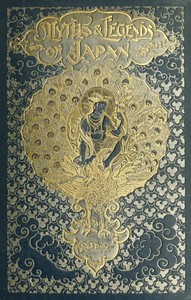
Myths & Legends of Japan — Key Ideas to Explore
Myths Legends
128,347 recorded words. 92 minutes difference from this book's estimate.
View Gutenberg source #45723

Before opening Zoological Mythology; or, The Legends of Animals, Volume 2 (of 2) — Themes and Context, the edition data offers a quick orientation: 149,565 words, 10 hr 51 min estimated reading time, and 25 detected text sections.
The text analysis averages about 23.9 words per sentence, while the detected sections provide another way to judge how the source is divided.
Project Gutenberg metadata also associates the work with “Folklore,” connecting these edition facts with the source record’s subject description.
Explore this collection
These alternatives are selected using recorded categories and estimated reading time.
About 559 minutes
Myths Legends
128,347 recorded words. 92 minutes difference from this book's estimate.
View Gutenberg source #45723About 765 minutes
Myths Legends
175,842 recorded words. 114 minutes difference from this book's estimate.
View Gutenberg source #14465About 534 minutes
Myths Legends
122,733 recorded words. 117 minutes difference from this book's estimate.
View Gutenberg source #45137Search stored excerpts and compare books → Choose by your preferences →
Choices use stored catalog measurements. Estimates vary with reading speed. A shared category is a catalog label, not a claim that two books have the same argument or literary quality.
Search reads excerpt text stored with this catalog and links to its associated Gutenberg record. The connection is stored in the site database; this tool does not recheck that every excerpt is word-for-word identical to that external record. Excerpt search does not cover every chapter and does not verify historical publication dates.
Catalog snapshot checked: 2026-09-25. Coverage: 91 public books, 91 available source excerpts.
Read the complete public-domain text at its original source.
Read on Project GutenbergDe Gubernatis opens his chapter on the hog with a dense summary of disguises: the hero and heroine assume animal forms, often as hogs or doves, to escape persecution or fulfill a quest. He cites the Vedic story of Apālā, who is cured of leprosy by Indra and wears a hog’s dress, and compares it to the Greek Circe turning men into swine. The method is relentlessly comparative, leaping from Sanskrit hymns to Tuscan folktales within a single paragraph.
This volume, the second of two, covers earth, air, and water animals. The table of contents alone lists over forty creatures, from the hedgehog to the whale. De Gubernatis, a professor of Sanskrit, treats each animal as a node in a vast mythological network, where the same symbolic functions recur across cultures.
Throughout the excerpts, transformation is rarely benign. The dove appears as a “mournful and diabolical form” imposed by external magic. De Gubernatis recounts a Tuscan story in which two doves perch on a ship’s mast and speak prophecies of doom: a hawk will tear out eyes, a horse will break a neck, a dragon will devour a bride and groom. The hero Gennariello averts each disaster by mutilating the animals before they can act, but his brother misinterprets his knife-wielding and condemns him to death. The doves are “messengers of death,” not helpers.
De Gubernatis links this to the funeral of Patroclus in the Iliad, where archers shoot at a dove hung on a mast. He also notes the prophetic doves at Dodona, who cry out “Zeus was, Zeus is, Zeus will be.” The dove thus oscillates between oracle and omen, its voice both divine and fatal. The pattern is clear: animal forms carry a heavy price, and the hero’s cunning often leads to further tragedy.
De Gubernatis begins with the hog as a “hero disguise.” He cites the Vedic maiden Apālā, who is cured by Indra and assumes a hog’s dress, and Godhā, a persecuted maiden in a hog’s dress. The hog is not merely a comic or base form; it is a protective covering that allows the hero or heroine to move unseen or to endure suffering. The author contrasts this with Circe, who uses the hog form to degrade men, showing that the same animal can signify either victimhood or villainy depending on context.
The summary also mentions hogs eating apples in a maiden’s stead, a motif that echoes the Persephone myth. De Gubernatis does not elaborate in the excerpt, but the pattern is consistent: the hog is a liminal creature, associated with both the underworld and the domestic sphere. The chapter’s inclusion of the hedgehog alongside the hog suggests a broader category of spiny or bristly animals that serve as boundary markers in myth.
Water appears repeatedly in the excerpts as a funereal element. The dove that meets its death by beating its head against a wall painted with water is a striking image. De Gubernatis connects this to the dove as a guide for the Argonauts and to Semiramis’s transformation into a dove after death. The dove is also a funereal symbol on Christian monuments, which explains the folk superstition against eating dove meat in Italy, Germany, Holland, and Russia.
The author’s method is to accumulate parallels without always resolving them. The dove is at once a guide, a prophet, a victim, and a symbol of the Holy Spirit. This multiplicity is typical of De Gubernatis’s approach: he treats each animal as a bundle of contradictory meanings, held together by the thread of Indo-European tradition. The reader is left to weigh the evidence and decide which interpretation fits the context.
De Gubernatis’s work is best read as a compendium of motifs rather than a single argument. The volume rewards readers who follow the footnotes and cross-references, tracing how a single animal can appear in a Vedic hymn, a Tuscan fairy tale, and a classical epic. The author’s erudition is immense, but his conclusions are often tentative, leaving room for the reader to draw their own connections.
Flipping through de Gubernatis’s volume, I paused on the hog’s funereal weight, that old Indo-European blur between flesh and spirit. It made me think of the Irish west, where such boundaries dissolve differently, in daylight more than myth. A quiet echo of those shadows lives in Visions and Beliefs in the West of Ireland, First Series — Key Ideas to Explore, as if the same dream simply changed its language.
Capture what you thought, learned, and would like to remember.