About 394 minutes
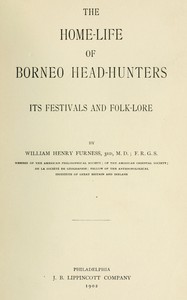
The home-life of Borneo head-hunters — Text and Context
Myths Legends
90,396 recorded words. 36 minutes difference from this book's estimate.
View Gutenberg source #71656
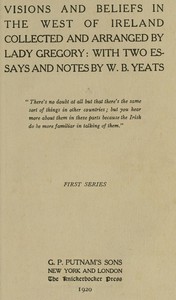
Visions and Beliefs in the West of Ireland, First Series — Key Ideas to Explore can be approached with a clearer sense of reading commitment from its source measurements: 82,332 words, 5 hr 58 min estimated reading time, and 8 detected text sections.
The text analysis averages about 23.9 words per sentence, while the detected sections provide another way to judge how the source is divided.
Project Gutenberg metadata also associates the work with “Folklore -- Ireland,” connecting these edition facts with the source record’s subject description.
Explore this collection
These alternatives are selected using recorded categories and estimated reading time.
About 394 minutes
Myths Legends
90,396 recorded words. 36 minutes difference from this book's estimate.
View Gutenberg source #71656About 487 minutes
Myths Legends
111,814 recorded words. 129 minutes difference from this book's estimate.
View Gutenberg source #69558About 534 minutes
Myths Legends
122,733 recorded words. 176 minutes difference from this book's estimate.
View Gutenberg source #45137Search stored excerpts and compare books → Choose by your preferences →
Choices use stored catalog measurements. Estimates vary with reading speed. A shared category is a catalog label, not a claim that two books have the same argument or literary quality.
Search reads excerpt text stored with this catalog and links to its associated Gutenberg record. The connection is stored in the site database; this tool does not recheck that every excerpt is word-for-word identical to that external record. Excerpt search does not cover every chapter and does not verify historical publication dates.
Catalog snapshot checked: 2026-09-25. Coverage: 91 public books, 91 available source excerpts.
Read the complete public-domain text at its original source.
Read on Project GutenbergLady Gregory's Visions and Beliefs in the West of Ireland, First Series opens with a detailed description of the Sidhe—shape-changers who can appear as men, women, birds, or even a barrel. The preface establishes that these beings are 'as many as the blades of grass' and inhabit ancient mounds, thorn-bushes, and ruined castles. This framing immediately grounds the reader in a specific, localized supernatural geography, distinct from generic fairy tales.
The preface describes the Sidhe not as remote spirits but as neighbors who share the physical world. They take food left on hearths, steal the strength from meat, and avoid salt. Their feasts involve robbing potatoes from ridges, leaving 'rottenness and decay.' This materiality—the cold potatoes, the cup of milk—anchors the supernatural in domestic reality. Lady Gregory notes that the Sidhe 'will build up a house in a moment' if they fancy one, and they can restore a castle battered by Cromwell's men. The folklore here is not abstract; it is tied to the land, to daily chores, and to historical memory.
The excerpts include several accounts of cures, often involving priests. One woman's son is healed after a priest's visit, but the horse dies instead—a trade-off that goes unexplained. Another man, John Curtis, describes how Father Callan read a Mass to stop his cattle from dying, only to be bitten by a dog afterward. The dog's madness is interpreted as a reaction to the stock's recovery. These stories present a world where spiritual power is tangible but unpredictable, and where the boundary between blessing and harm is thin. The narrators speak matter-of-factly, as if such events are unremarkable.
Lady Gregory preserves the dialect and rhythm of her informants. A 'Man of the Islands' speaks of an old woman who 'does cures with herbs' but lost two fingers in hospital. Another woman 'never put a shoe on her feet from the time of her birth' as a penance. The sentences are short, often paratactic: 'She never married and would never eat meat.' This style gives the accounts a direct, unpolished quality. The speakers do not explain or justify; they report. The result is a collection that feels like overheard conversation rather than edited folklore, with all the quirks and contradictions of oral testimony.
Readers should approach this volume as a record of specific voices rather than a systematic survey. The catalog subjects—folklore, social life and customs—are accurate, but the excerpts show a world where the supernatural is embedded in practical concerns: livestock, illness, family disputes. Pay attention to who speaks and how; the annotator W. B. Yeats adds another layer, but the core is Lady Gregory's attentive ear.
Reading Lady Gregory’s accounts of the Sidhe, I remembered my grandmother’s hush when mentioning the “good people” near our own bog. That same quiet reverence filled me years ago when I first held her Gods and Fighting Men, the Tuatha de Danaan feeling less like myth and more like a half-remembered conversation. Gods and Fighting Men The story of the Tuatha de Danaan and of the Fianna of Ireland, arranged and put into English by Lady Gregory — A Reader’s Guide brought that same ache of nearness, as if the old tales were waiting just behind the curtain of the ordinary.
Create a short personal record of your experience with this book.