About 534 minutes
Myths & Legends of Babylonia & Assyria — Themes and Context
Myths Legends
122,733 recorded words. 25 minutes difference from this book's estimate.
View Gutenberg source #45137
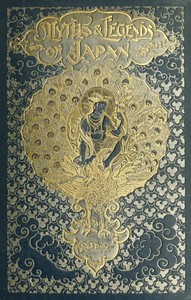
The source record for Myths & Legends of Japan — Key Ideas to Explore measures this digital text at 128,347 words, 9 hr 19 min estimated reading time, and 22 detected text sections.
The text analysis averages about 20.8 words per sentence, while the detected sections provide another way to judge how the source is divided.
Project Gutenberg metadata also associates the work with “Folklore -- Japan,” connecting these edition facts with the source record’s subject description.
Explore this collection
These alternatives are selected using recorded categories and estimated reading time.
About 534 minutes
Myths Legends
122,733 recorded words. 25 minutes difference from this book's estimate.
View Gutenberg source #45137About 487 minutes
Myths Legends
111,814 recorded words. 72 minutes difference from this book's estimate.
View Gutenberg source #69558About 651 minutes
Myths Legends
149,565 recorded words. 92 minutes difference from this book's estimate.
View Gutenberg source #38688Search stored excerpts and compare books → Choose by your preferences →
Choices use stored catalog measurements. Estimates vary with reading speed. A shared category is a catalog label, not a claim that two books have the same argument or literary quality.
Search reads excerpt text stored with this catalog and links to its associated Gutenberg record. The connection is stored in the site database; this tool does not recheck that every excerpt is word-for-word identical to that external record. Excerpt search does not cover every chapter and does not verify historical publication dates.
Catalog snapshot checked: 2026-09-25. Coverage: 91 public books, 91 available source excerpts.
Read the complete public-domain text at its original source.
Read on Project GutenbergDavis opens his preface by acknowledging debts to Lafcadio Hearn, Basil Hall Chamberlain, and W. G. Aston, positioning his work as a synthesis of Western scholarship on Japanese folklore. The first excerpt from the story 'The Peony-Lantern' immediately plunges the reader into a ghostly romance: a young samurai, Shinzaburō, falls in love with a woman who proves to be a spirit. The narrative voice is direct and slightly formal, with phrases like 'the spying Tomozō fled' and 'the evil power of Karma.' This combination of scholarly framing and vivid supernatural incident sets the tone for the entire collection.
Davis's preface is more than a list of thanks; it reveals his method. He writes that he has 'borrowed from their work as persistently as Japan has borrowed from other countries,' a simile that frames his compilation as an act of cultural transmission. He cites specific sources: Chamberlain's translation of the Kojiki, Aston's Nihongi, and Hearn's Glimpses of Unfamiliar Japan. For a first reader, this preface signals that the myths are filtered through late-Victorian and Edwardian scholarly lenses. The mention of 'the Land of the Gods' (a phrase Davis attributes to Hearn) hints at the reverent tone that pervades many of the tales. Readers should expect a blend of academic citation and literary retelling, not a direct translation of Japanese texts.
In 'The Peony-Lantern,' the narrator adopts a matter-of-fact tone even when describing the uncanny. When Tomozō spies on the women, the text says 'a second woman's figure sprang up from within the room'—the verb 'sprang' is abrupt, almost violent. Later, the wise Yusai declares that 'love between the living and the dead ended in the destruction of the living,' a moral pronouncement that the story does not soften. The ghostly geta make a sound rendered as 'karan-koron, karan-koron,' an onomatopoeia that recurs as a motif. This combination of precise detail (the peony-lantern, the holy charms) and stark judgment gives the supernatural a tangible weight. First-time readers should note how Davis uses sensory cues—sound, sight, touch—to make the ghostly feel immediate.
The excerpt from 'The Peony-Lantern' is structured around a series of consultations: Tomozō reports to Yusai, Yusai advises Shinzaburō, then Shinzaburō seeks the high-priest Ryōseki. Each authority figure offers a layer of interpretation. Yusai calls the ghostly love 'a horrible fate'; Ryōseki gives physical protections—a gold Buddha, a sutra, sacred texts to paste over openings. The story thus becomes a chain of responses to the supernatural, not just a simple ghost tale. This pattern recurs in other myths in the collection, where wise men, priests, or gods intervene. For a first reading, paying attention to who advises whom reveals the moral and religious assumptions Davis is foregrounding: that the dead can harm the living, that Buddhist rituals offer protection, and that human desire can lead to destruction.
Two motifs stand out in the excerpt: the peony-lantern and the sacred texts. The lantern is first described as 'adorned with a peony-lantern swinging gently in the breeze' at the tomb, and earlier Yoné carries one. It becomes a symbol of the ghostly presence, both beautiful and ominous. The sacred texts are pasted 'over an opening in his house,' creating a boundary between the living and the dead. When the ghosts cannot enter, they weep. These motifs—light, boundary, and ritual object—appear in other tales in the collection. Davis often uses them to mark moments of transition between worlds. Readers encountering the book for the first time will find that tracking such recurring elements helps unify the diverse stories, which range from creation myths to folk legends.
Because the excerpts cover only the preface and one story, the full range of Davis's collection—which includes tales of gods, heroes, and animals—remains unseen. However, the patterns visible here—scholarly framing, moral commentary, and sensory detail—likely persist throughout. A first reader might approach the book as a guided tour of Japanese folklore filtered through a Western editor's sensibility, noting where Davis adds explanation or judgment. The 'Peony-Lantern' story, with its blend of romance and horror, offers a strong entry point into the collection's atmosphere.
Some evenings, the way Davis lets shadows fall between the old temple bells and the peony lantern’s glow still hums quietly in me, like a faded photograph. That same unhurried hush lives in Myths and Legends of Alaska — Themes and Context, where each retelling feels less like a story and more like a snow-bitten breath I almost remember.
Create a short personal record of your experience with this book.