About 115 minutes
Stories of Enchantment — A Closer Reading
Fantasy Classics
26,328 recorded words. 6 minutes difference from this book's estimate.
View Gutenberg source #50931
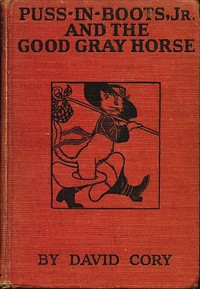
The source record for Puss in Boots, Jr., and the Good Gray Horse — Key Ideas to Explore measures this digital text at 24,986 words, 1 hr 49 min estimated reading time, and 5 detected text sections.
The text analysis averages about 14.5 words per sentence, while the detected sections provide another way to judge how the source is divided.
Project Gutenberg metadata also associates the work with “Fairy tales,” connecting these edition facts with the source record’s subject description.
Explore this collection
These alternatives are selected using recorded categories and estimated reading time.
About 115 minutes
Fantasy Classics
26,328 recorded words. 6 minutes difference from this book's estimate.
View Gutenberg source #50931About 80 minutes
Fantasy Classics
18,236 recorded words. 29 minutes difference from this book's estimate.
View Gutenberg source #697About 160 minutes
Fantasy Classics
36,689 recorded words. 51 minutes difference from this book's estimate.
View Gutenberg source #50658Search stored excerpts and compare books → Choose by your preferences →
Choices use stored catalog measurements. Estimates vary with reading speed. A shared category is a catalog label, not a claim that two books have the same argument or literary quality.
Search reads excerpt text stored with this catalog and links to its associated Gutenberg record. The connection is stored in the site database; this tool does not recheck that every excerpt is word-for-word identical to that external record. Excerpt search does not cover every chapter and does not verify historical publication dates.
Catalog snapshot checked: 2026-09-25. Coverage: 91 public books, 91 available source excerpts.
Read the complete public-domain text at its original source.
Read on Project GutenbergPuss in Boots, Jr., rides his Good Gray Horse through a landscape where nursery rhymes and fairy-tale logic govern every encounter. The story opens with a spider who, instead of spinning a web, sits in a tiny lace house and trades a dewdrop-turned-diamond for magic wings—a transaction that sets the pattern for the book: objects and creatures are not what they seem, and deals are struck with cheerful pragmatism.
The narrative voice is brisk and conversational, peppered with phrases like "by and by, after a while" that mimic oral storytelling. Characters speak in rhyming couplets or sing verses from Mother Goose, and the world is filled with talking animals, bald-headed eagles running newspapers, and hollow stumps leading to underground rooms. The book is less a continuous plot than a series of linked vignettes, each introducing a new figure from nursery lore.
Throughout the excerpts, characters frequently speak in verse, and these rhymes often serve as the medium for negotiation. When Puss encounters a voice offering wings for his horse, the request is framed as a four-line poem: "If I bring four wings to you / To fasten on your horse's shoe / Will you give me for my locket / The sparkling diamond in your pocket?" The spider earlier dismissed the diamond as useless, but the winged speaker values it as a locket ornament. Rhyme here is not decoration but a functional language of trade.
Similarly, Puss himself sings to a donkey: "Donkey, donkey, old and gray, / Open your mouth and gently bray; / Lift your ears and blow your horn / To wake the world this sleepy morn." The donkey resists, insisting "I'm no rooster," yet he brays anyway—suggesting that the power of the rhyme compels participation. The book treats Mother Goose verses as scripts that characters must follow, even when they protest.
The story repeatedly blurs the line between ordinary objects and enchanted ones. A dewdrop on a spiderweb becomes a real diamond because of "the witch's feather in your hat." The spider herself is dressed in human attire—"black silk mitts" and a "little black bonnet"—yet she waits for flies as any spider would. The pearl necklace found by the crow is later confirmed as belonging to a little yellow hen, but the hen keeps it in a jewel case that is "as empty as a Christmas stocking on the Fourth of July."
Even the Good Gray Horse is both a steed and a potential flying creature, if only the right wings can be attached. The magic is never explained or systematized; it simply coexists with the everyday. A bald-headed eagle runs a newspaper office; a farmer's daughter worries that flowers named Daffy, Down, and Dilly will encounter "bad crows" on their journey. The world operates on a logic where the literal and the figurative are indistinguishable.
The book functions as a tour of Mother Goose country, introducing a new familiar figure in nearly every chapter. The table of contents lists characters such as Georgy Porgy, Humpty-bumpty (a variant of Humpty Dumpty), Three Little Kittens, Doctor Foster, Little Jenny Wren, Little Boy Blue, Lucy Locket, Tom the Piper's Son, Old Dame Trot, Bobby Shafto, and Little Robin Redbreast. Each appears briefly, often in a single episode, and the narrative moves on without lingering.
This structure means the book has no central conflict or character arc. Puss serves as a wandering observer, and the Good Gray Horse is a mode of transport rather than a personality. The pleasure comes from recognizing the nursery-rhyme references and seeing how they are woven into a continuous journey. The crow in a silk hat, for instance, is a variation on the traditional magpie or jackdaw of folklore, but here he is polite and helpful, returning the lost necklace.
Readers familiar with Mother Goose will find the book a playful reimagining of well-known characters, while newcomers can enjoy the simple, episodic adventures. Pay attention to the way objects and animals talk—the spider, the crow, the donkey, and even the flowers have voices. The story rewards those who notice how each encounter echoes a nursery rhyme or folk tale, and who appreciate the quiet humor in a world where a bald-headed eagle runs the lost-and-found column.
Years among these shelves have taught me that wishing and riding are kindred deceits. Puss’s gray horse carries the boy into nursery wonders, yet the diamond wings feel much like Aladdin’s lamp—small things promising escape. I often find myself lingering between them, those quiet tales of longing for a different turn, two old friends whispering the same secret. Aladdin and the Magic Lamp — Key Ideas to Explore holds that wishful glow just as gently.
Build a private reading journal entry for this title.