About 160 minutes
The Feather — Inside the Classic
Fantasy Classics
36,689 recorded words. 66 minutes difference from this book's estimate.
View Gutenberg source #50658
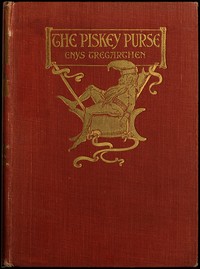
The Piskey-Purse: Legends and Tales of North Cornwall — Reading Notes can be approached with a clearer sense of reading commitment from its source measurements: 51,897 words, 3 hr 46 min estimated reading time, and 6 detected text sections.
The text analysis averages about 22.5 words per sentence, while the detected sections provide another way to judge how the source is divided.
Project Gutenberg metadata also associates the work with “Legends -- England -- Cornwall (County),” connecting these edition facts with the source record’s subject description.
Explore this collection
These alternatives are selected using recorded categories and estimated reading time.
About 160 minutes
Fantasy Classics
36,689 recorded words. 66 minutes difference from this book's estimate.
View Gutenberg source #50658About 115 minutes
Fantasy Classics
26,328 recorded words. 111 minutes difference from this book's estimate.
View Gutenberg source #50931About 109 minutes
Fantasy Classics
24,986 recorded words. 117 minutes difference from this book's estimate.
View Gutenberg source #32964Search stored excerpts and compare books → Choose by your preferences →
Choices use stored catalog measurements. Estimates vary with reading speed. A shared category is a catalog label, not a claim that two books have the same argument or literary quality.
Search reads excerpt text stored with this catalog and links to its associated Gutenberg record. The connection is stored in the site database; this tool does not recheck that every excerpt is word-for-word identical to that external record. Excerpt search does not cover every chapter and does not verify historical publication dates.
Catalog snapshot checked: 2026-09-25. Coverage: 91 public books, 91 available source excerpts.
Read the complete public-domain text at its original source.
Read on Project GutenbergEnys Tregarthen's The Piskey-Purse opens with a precise geography of belief: Polzeath Bay, called Hayle Bay only on maps, was once 'much frequented by the Piskeys.' The introduction names Pentire Glaze cliffs, where lodging-houses now stand, yet insists that 'the marks of fairy feet are not all obliterated.' This tension between vanished fairy presence and surviving traces—'Piskey Walks' on cliff edges—sets the tone for a collection that treats folklore as a living, local record.
Tregarthen classifies Cornish fairies into three kinds: the Good Little People, the Merry Little People (Piskeys and Nightriders), and the Bad Little People (Spriggans, who guard hidden treasures). She also recounts two origin traditions: that fairies are Druids who shrank for opposing Christianity, or that they are Cornwall's original inhabitants. These framing details ground the tales in a specific cosmology.
Each tale in the collection is anchored to a named location. 'The Piskey-Purse' is set in Polzeath Bay, St. Minver parish; 'The Magic Pail' on a moorland between Carn Kenidzhek and Carn Boswavas, near the Ding Dong tin-mine; 'Witch in the Well' in Padstow; 'Borrowed Eyes and Ears' at Harlyn Bay; and 'Little White Hare' in the Vale of Lanherne. This specificity suggests that Tregarthen collected stories from particular communities, and that the landscape itself is integral to the folklore.
The introduction notes that Piskeys danced on Pentire Glaze cliffs, where 'the rings where Piskeys danced may yet be seen.' The phrase 'Piskey Walks' refers to tiny paths on cliff edges. These details imply that the tales are not merely fanciful but are tied to observable features—fairy rings, footpaths—that local people could point to. The reader is invited to imagine these places as they were, before lodging-houses altered them.
In the excerpt from 'The Magic Pail,' the fairy woman's songs are central to the narrative. She sings to reclaim a 'Ninnie-Dinnie' or 'pednpaley'—a borrowed fairy child. The songs use repetitive, rhyming structures ('Give me my Ninnie, my dear little mudgeskerry') and include invented words like 'mudgeskerry' and 'pednpaley,' which may be Cornish dialect or fairy language. The songs also list magical objects: 'Magic and Pail, / And the Long-Eared's wail.'
The crippled woman, Joan, responds to these songs with emotional language: 'I give 'ee back your dinky... though I thought she did by this time.' The exchange is framed as a moral test—Joan must learn 'it was better to give than to keep.' The pail itself is animate: it 'left the dresser and came towards the fireplace and hopped into the costan.' This blend of song, dialect, and magical objects creates a distinctive narrative texture.
The excerpt from 'The Magic Pail' presents a clear moral dilemma: Joan must return a fairy child she has raised for ten years. The fairy woman's songs emphasize that 'the time is now up' and that the child belongs to the fairy world. Joan's internal conflict is expressed through physical gestures—'her voice trembled'—and through the child's 'eyes of tender entreaty.' The resolution comes when Joan 'conquered her selfishness' and gives the child back, even though it 'breaks my heart-strings.'
This pattern of a human making a difficult choice in a fairy bargain recurs in other tales, though the excerpts do not reveal their outcomes. The introduction warns that Piskeys 'lead the traveller astray' until he turns a garment inside out, suggesting that humans must use specific countermeasures. The moral universe is one where fairness and generosity are rewarded, but the fairy folk are not uniformly benevolent: Spriggans are 'spiteful and lovers of money.'
Readers approaching The Piskey-Purse will find that Tregarthen's tales are best appreciated as local documents rather than universal fairy stories. Pay attention to the place names, the dialect words, and the songs—they carry the texture of oral tradition. The collection does not offer a single theory of fairies but presents multiple, sometimes contradictory, traditions. Let the specific landscapes and the moral weight of each bargain guide your reading.
I keep thinking about how those North Cornwall tales treat the Piskeys as old, hidden neighbours rather than fairy-tale creatures—quietly tied to the land itself. That lingering sense of something ancient just beneath ordinary ground reminded me of another book, The Feather — Inside the Classic, which left me with the same hushed feeling afterwards. Some stories stay closer than we expect.
Create a short personal record of your experience with this book.