About 109 minutes
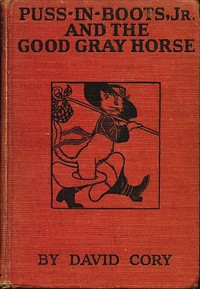
Puss in Boots, Jr., and the Good Gray Horse — Key Ideas to Explore
Fantasy Classics
24,986 recorded words. 29 minutes difference from this book's estimate.
View Gutenberg source #32964

For The Light Princess — Reading Companion, the stored edition analysis reports 18,236 words, 1 hr 20 min estimated reading time, and 2 detected text sections.
The text analysis averages about 16.7 words per sentence, while the detected sections provide another way to judge how the source is divided.
Project Gutenberg metadata also associates the work with “Fairy tales,” connecting these edition facts with the source record’s subject description.
Explore this collection
These alternatives are selected using recorded categories and estimated reading time.
About 109 minutes
Fantasy Classics
24,986 recorded words. 29 minutes difference from this book's estimate.
View Gutenberg source #32964About 115 minutes
Fantasy Classics
26,328 recorded words. 35 minutes difference from this book's estimate.
View Gutenberg source #50931About 37 minutes
Fantasy Classics
8,395 recorded words. 43 minutes difference from this book's estimate.
View Gutenberg source #57Search stored excerpts and compare books → Choose by your preferences →
Choices use stored catalog measurements. Estimates vary with reading speed. A shared category is a catalog label, not a claim that two books have the same argument or literary quality.
Search reads excerpt text stored with this catalog and links to its associated Gutenberg record. The connection is stored in the site database; this tool does not recheck that every excerpt is word-for-word identical to that external record. Excerpt search does not cover every chapter and does not verify historical publication dates.
Catalog snapshot checked: 2026-09-25. Coverage: 91 public books, 91 available source excerpts.
Read the complete public-domain text at its original source.
Read on Project GutenbergFrom its first sentence, George MacDonald's The Light Princess announces a narrator who treats fairy-tale conventions with irreverent familiarity. The king's complaint that "all the queens of my acquaintance have children" sets a tone of domestic satire, while the queen's patient smile and the king's self-justifying forgetfulness of his sister establish a world where adult foibles drive the plot. The curse itself—a princess who loses all gravity—is delivered through the spiteful Princess Makemnoit, whose face is described with startling specificity: "wrinkles of contempt crossed the wrinkles of peevishness." This editorial note examines how MacDonald's diction, dialogue, and descriptive choices create a tale that is simultaneously whimsical and pointed.
MacDonald's word choices consistently literalize emotional states into physical phenomena. The princess's lightness is not merely magical but described in terms that evoke moral weight: she "laughed too much," and her laughter is "pert" on shore but "gentle" in water. The narrator's vocabulary shifts between the colloquial—"won't I, just?"—and the precise, as when the moon's reflection is "shimmering and trembling and wavering, spreading and contracting." This oscillation mirrors the princess's own instability. The prince's song, with its repeated "radiant whiteness" and "waters sad," uses diction that blurs the boundary between the lake and the sky, suggesting that language itself is a medium where gravity can be suspended.
The exchanges between the prince and princess reveal their inner states through rhythm and tone. The princess's dialogue on land is marked by forwardness and pert replies: "How do you know I am a prince, princess?" "Because you are a very nice young man, prince." In water, however, her speech becomes more hesitant and puzzled, as when she "began to look puzzled, as if she were trying to understand what he meant." The prince's own dialogue shifts from courtly formality to a more direct, almost pleading tone: "If I marry her, I see no help for it: we must turn merman and mermaid." MacDonald uses these contrasts to show how the curse affects not just the princess's body but her very mode of relation.
MacDonald's descriptions of the lake scenes are the most sensuous in the excerpts, relying on a vocabulary of liquidity and illumination. The moon is "at the bottom of a deeper and bluer lake than theirs," a simile that inverts the expected hierarchy of sky and water. The prince's fancy that he is "swimming in the sky" is treated with the princess's laughter, yet the narrative does not dismiss it. Instead, the description of diving "deep in the water, and then, turning round, look up through it at the great blot of light" suggests a world where perspective is constantly destabilized. These patterns recur in the princess's own behavior: she is most "modest and maidenly in the water," as if the element itself confers a gravity she otherwise lacks.
The narrator's asides—"Now it does not generally matter if somebody is forgotten, only you must mind who"—create a conspiratorial tone that undercuts the fairy-tale form. MacDonald's narrator is not omniscient but opinionated, offering judgments like "she was, indeed, a very nice queen" and speculating about the king's motives. This voice is most evident in the treatment of Princess Makemnoit, whose appearance is described with grotesque precision: "her forehead was as large as all the rest of her face, and projected over it like a precipice." The narrator's willingness to moralize—"poor relations don't do anything to keep you in mind of them"—blurs the line between storytelling and social commentary, inviting readers to question the very conventions that structure the tale.
The excerpts reveal a careful structural symmetry: the princess's loss of gravity is mirrored by the prince's increasing emotional weight. The narrative moves from the king's complaint about childlessness to the princess's inability to be serious, and finally to the prince's desire to "turn merman and mermaid." Each chapter heading—"What! No Children?", "Won't I, Just?", "She Can't Be Ours"—functions as a miniature thesis, framing the action in terms of negation or lack. The curse itself is never fully explained; instead, its effects are shown through behavior. This structural choice emphasizes that the tale is less about breaking a spell than about learning to inhabit a condition of lightness, both literal and figurative.
Readers attentive to MacDonald's craft will notice how the tale's humor and pathos arise from the same source: the gap between what characters say and what they do. The princess's laughter, the prince's songs, and the narrator's asides all contribute to a work that rewards close attention to language. For those interested in the interplay of fairy-tale convention and psychological insight, The Light Princess offers a compact but rich example of how Victorian fantasy could use the fantastic to probe the ordinary.
That rainy afternoon, The Light Princess kept me company, her weightless grief lingering long after the final page. The way lightness mirrored emotional hollowness felt strangely familiar. Later, idly browsing, I stumbled upon Puss in Boots, Jr., and the Good Gray Horse — Key Ideas to Explore, and its grounded, steady friendship offered a gentle counterweight, almost like the rain easing into a quiet evening.
Answer a few questions and save a private reflection on this device.