About 109 minutes
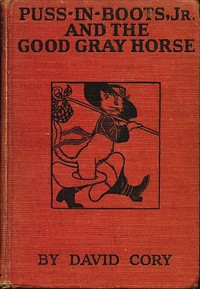
Puss in Boots, Jr., and the Good Gray Horse — Key Ideas to Explore
Fantasy Classics
24,986 recorded words. 6 minutes difference from this book's estimate.
View Gutenberg source #32964
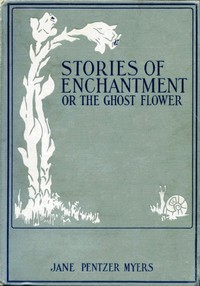
Before opening Stories of Enchantment — A Closer Reading, the edition data offers a quick orientation: 26,328 words, 1 hr 55 min estimated reading time, and 4 detected text sections.
The text analysis averages about 18.9 words per sentence, while the detected sections provide another way to judge how the source is divided.
Project Gutenberg metadata also associates the work with “Fairy tales,” connecting these edition facts with the source record’s subject description.
Explore this collection
These alternatives are selected using recorded categories and estimated reading time.
About 109 minutes
Fantasy Classics
24,986 recorded words. 6 minutes difference from this book's estimate.
View Gutenberg source #32964About 80 minutes
Fantasy Classics
18,236 recorded words. 35 minutes difference from this book's estimate.
View Gutenberg source #697About 160 minutes
Fantasy Classics
36,689 recorded words. 45 minutes difference from this book's estimate.
View Gutenberg source #50658Search stored excerpts and compare books → Choose by your preferences →
Choices use stored catalog measurements. Estimates vary with reading speed. A shared category is a catalog label, not a claim that two books have the same argument or literary quality.
Search reads excerpt text stored with this catalog and links to its associated Gutenberg record. The connection is stored in the site database; this tool does not recheck that every excerpt is word-for-word identical to that external record. Excerpt search does not cover every chapter and does not verify historical publication dates.
Catalog snapshot checked: 2026-09-25. Coverage: 91 public books, 91 available source excerpts.
Read the complete public-domain text at its original source.
Read on Project GutenbergJane Pentzer Myers opens Stories of Enchantment with a dedication that immediately establishes a liminal space: “Just between the ‘Land o’ Dreams’ and broad daylight is a beautiful world.” This borderland, where “the real and the unreal are so strangely blended,” becomes the collection’s governing conceit. Across twelve tales, Myers tests the boundary between everyday experience and fantasy, often grounding her most magical moments in precise, sensory details drawn from the American landscape.
Myers’s descriptive language is notably concrete. In “The Ghost Flower, or the White Blackbird,” she describes a mountain stream that “leaps and sings and flashes to its grave in the desert sand.” The verbs are active, the imagery specific: cottonwood trees, short grass, underbrush. This is not a generic fairy-tale setting but a recognizable Western American scene, complete with “energetic American or Chinaman” ranching the valley. The fantastical elements—a ghost flower, a white blackbird—emerge from this grounded world, making the transition between real and unreal feel natural rather than abrupt.
Myers renders children’s speech with notable authenticity. In the excerpt from the cornfield story, Theo tells her mother about a “little girl” who lives in the corn and changes from a young lady to an old one. Theo’s narration is colloquial and hesitant: “I got real well acquainted with her,” “I just couldn’t ’dure to see her go.” The mother’s response—“Well, I declare!”—and her later pragmatic suggestion to turn the cornfield into pasture reveal a generational tension between imaginative play and adult practicality. Myers lets the child’s voice carry the wonder, while the mother’s dialogue grounds the scene in domestic reality.
The collection’s structure reinforces its borderland theme. The opening dedication addresses a child directly, inviting her into the “beautiful world” between dreams and daylight. The first story begins with a sweeping geographical description before narrowing to a specific encounter. Later, “At the Wayside Cross” shifts to a mother’s bedside, where an angel and three fateful sisters appear in a twilight vision. Myers frames each tale with a clear narrative voice that acknowledges the reader, yet she avoids heavy-handed moralizing. The stories are linked by recurring motifs—ghosts, flowers, transformation—but each stands alone as a vignette.
Certain details recur across the excerpts: the “little white ghost-flower” of the dedication reappears as a story title; cornfields become sites of metamorphosis; Indian characters appear both in historical conflict and in a child’s imaginative play. Myers does not explain these connections, leaving them as subtle echoes. The mother in “At the Wayside Cross” prays for knowledge of her baby’s future, and the angel grants her a vision—a moment that mirrors the collection’s own promise to show readers a world where “good wishes come true.” The threads are woven lightly, inviting the reader to notice patterns without forcing a single interpretation.
Readers approaching Stories of Enchantment should attend to the way Myers uses specific, often American, settings to anchor her fantasies. The dialogue, especially among children, rewards close reading for its natural cadence. The collection does not build toward a climax but rather offers a series of discrete glimpses into its borderland. Treat each story as a self-contained experiment in blending the real with the imagined, and note how the author’s descriptive choices shape the tone of each tale.
Reading about Myers’s quiet blending of hearth and hedge reminds me of evenings when my grandmother’s voice carried me from her kitchen to cobbled lanes. I felt that same hush once with Puss in Boots, Jr., and the Good Gray Horse — Key Ideas to Explore. Both books hold the door open, letting ordinary rooms breathe with impossible air.
Create a short personal record of your experience with this book.